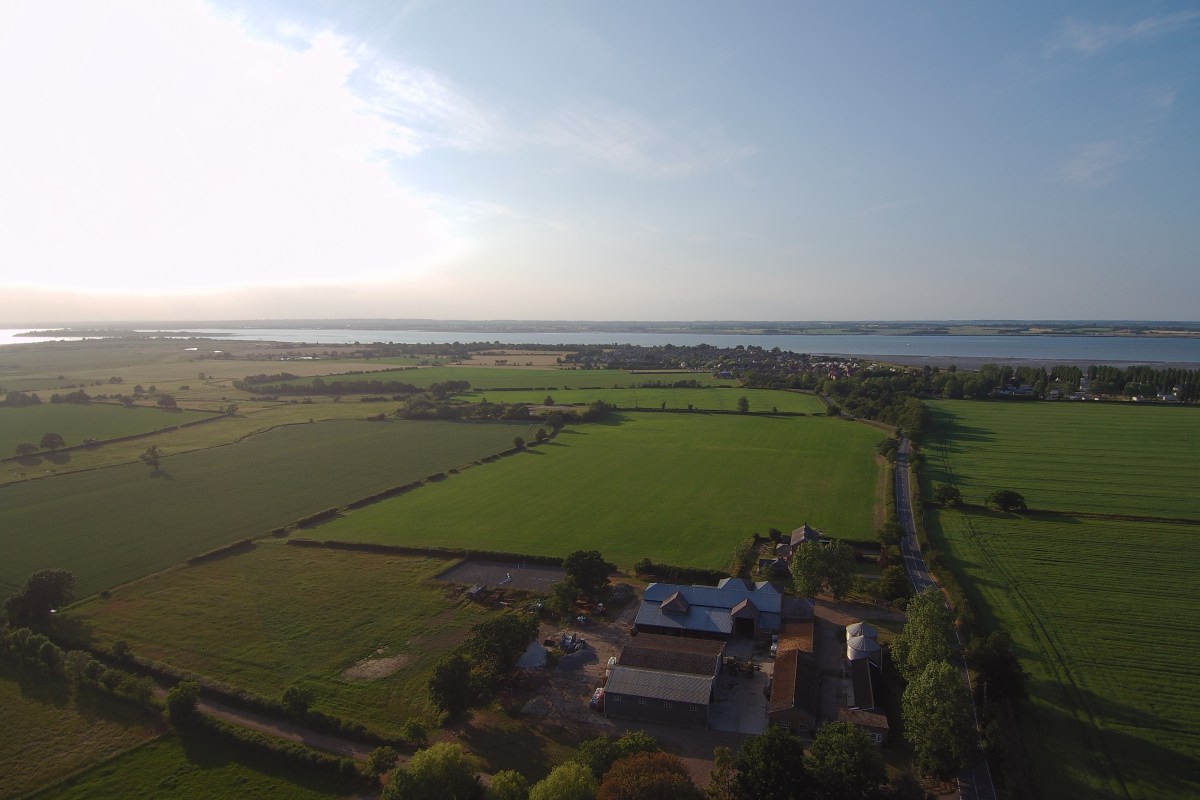
Motts farm obviously has a long history of which we will go into in the future, but for now we will give you a little insight into how it came to be the farm it is today.
Motts was bought by Simon’s grandfather, William Henry Cowell also known as Harry, in 1953 and along with most of the farms on the Dengie peninsular had a dairy herd that supplied London with milk. With the vast majority of the local area being used to feed cows it will be no surprise that the fields looked very different from today. They would have been mostly grassland but also they would have been split up into more smaller fields than the large arable fields we know now.
The farm was then taken on by Harry’s son, Henry in 1955 at the grand age of 21. He would continue to grow the dairy herd and a small amount of arable crops (this would be for food but also to supply extra feed for the cows). In 1976 Henry was joined by Simon, who still runs the farm today. It wasn’t long after, that the growing pressure of the European milk lakes and butter mountains proved too much and the farm became solely an arable farm. It wasn’t only them, as all of the local dairy farms went the same way and the Dengie no longer has a dairy farm at all.
Dairy isn’t the only area of farming being given a ‘squeeze’, as with any business, all areas are always under pressure from decreasing margins. With this being the case, Motts is predominately a one man operation with Luke joining Simon in the summer with harvest and other jobs that require an extra pair of hands.
Margins aren’t the only hurdle that needed over coming, much of the land we farm is reclaimed marsh land (we are working on maps to show the local area before the land was reclaimed) and London clay. This heavy land made establishing crops ever more difficult with more and more chemicals being used. It is for this reason that 20 years ago we started experimenting with a different way of managing the soil, so that now we never plough or do any cultivating, which we will cover in more detail another day. This method of farming is not common practice now and was even less so in the 90’s when we began, but it has allowed us to improve the quality of the soil without the need for so many chemicals and fertilisers.
Thanks for reading, see you next time.
 Motts Farm