
No-till, or direct drilling, is a method of farming which means that you drill directly into uncultivated land i.e. without tillage. It is a method that we use at Motts farm for a multitude of reasons. As we mentioned in A recent history of Motts Farm, over the past 20 years we have been experimenting with a different method of crop establishment, and by looking after the soil, this has led to no ploughing or cultivating at all.
Motts farm is predominantly heavy clay loam which has a high level of magnesium. This means that in the summer it bakes very hard and in the winter is very sticky, giving us a very short window in which to plough and cultivate ready for drilling. Because of this, we were unable to consider drilling in the spring and this left a rotation of two autumn drilled crops; wheat and oil seed rape. As you can imagine, it was not an ideal rotation as it did not give the soil enough variety.
The first thing we did was to stop ploughing as we either couldn’t get the plough into the ground, or ended up with with nothing more than a sticky mess with seemingly no middle ground. Once we had stopped ploughing we continued with a small amount of subsoiling and disc cultivating but soon realised that this was counter productive. By doing this we were incorporating last years straw into the top few inches and the new seeds were not only in poor conditions but also competing with the straw for valuable nitrogen as it broke down. By not incorporating the straw we found that it encouraged worm activity as well making it easier to deal with weeds.
After harvest the straw from the back of the combine never spreads as evenly as we would like. To combat this, we have a 6 metre wide straw rake with 72 tines that helps spread the chopped straw. This is a quick and light method that we do diagonally to the direction of combining twice after harvest, once as soon as we can after the combine has left the field and then again around two weeks later on the opposite diagonal. This not only helps to distribute straw but also helps to disrupt and suppress unwanted slug activity. Occasionally there is too much straw for this, depending on the crop and variety, so we leave the straw in rows so that it can be baled before spreading the remainder.
Once the straw is evenly distributed across the field we then go straight into the stubble with the drill without disrupting the soil or the organisms within. We have tried various different drills over the years but we prefer to use out lightweight tractor and 3m SimTech drill which opens up an “inverted T” in which the seeds are sown. We have found that this is the best drill for us as it does not suffer the blockages from the straw that we have previously struggled with.
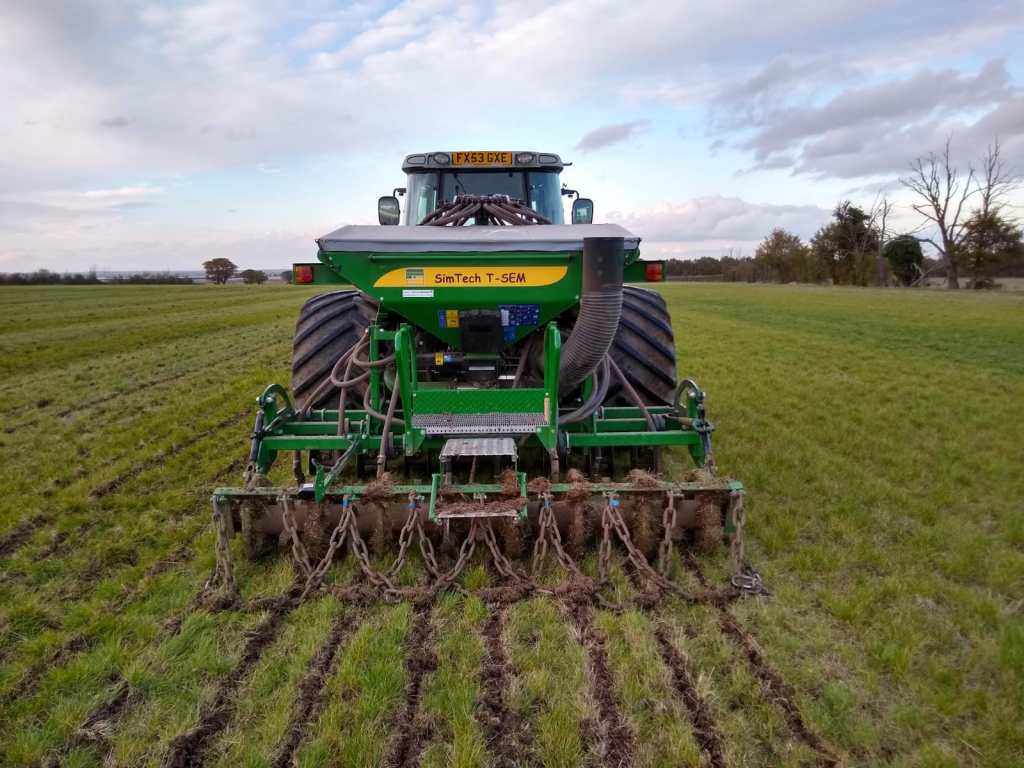
We have found that the no-till approach has revolutionised not only how we farm but also what we can farm. We can now grow many crops, including oats, wheat, linseed, beans, grass-seed, canary seed and lucerne amongst many others, compared to the two crops we were rotating before. As well as this we making less passes over the ground and allowing the soil to “fix” itself rather than us throwing more and more chemicals at it to get the required nutrients. The main thing that we add is home-made compost, though we will cover that in future.
If you would like a more in depth read on drilling and the drill itself you can go the the Simtech website where they have a write up about Motts farm.
Thanks for reading. See you next time.
 Motts Farm